
Buying advice · 4 min read
Understanding a Pool Equipment Satisfaction Guarantee
A satisfaction guarantee is useful only when you understand what you can do with the equipment and what happens if you decide to return it. A large number of days in a headline does not answer those questions. Before chalking a new cue, replacing its tip or taking it into a long practice session, read the written conditions for that purchase and resolve anything unclear with the seller.
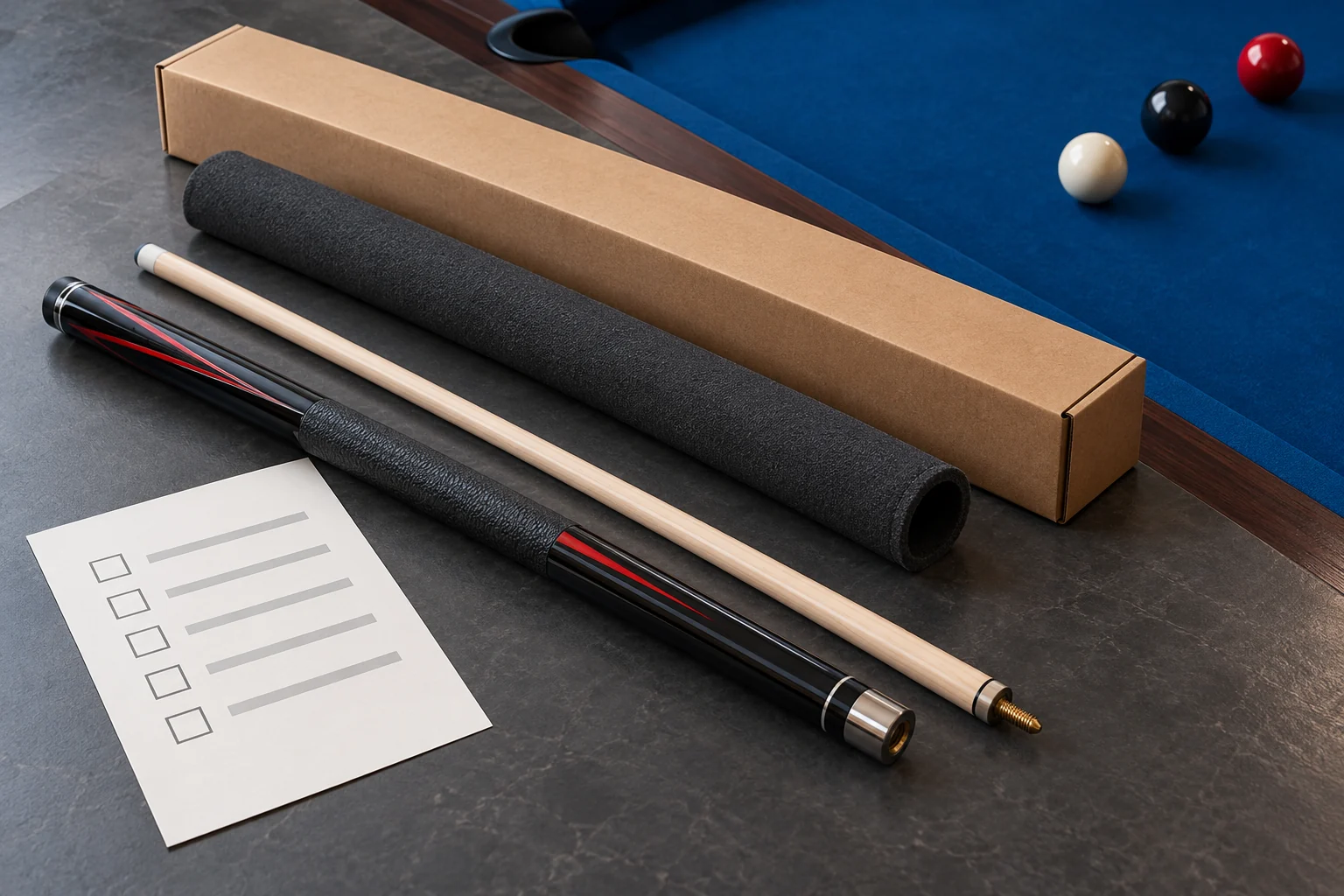
Start with the question you need answered
For a cue purchase, your question might be whether you can assess the feel at the table. For a shaft, it might be whether you can check the joint fit. For a glove, it might be whether trying the size is permitted. Tell the seller the specific inspection or use you have in mind instead of asking only whether the product is guaranteed.
A useful message is: I want to check this cue's balance and joint fit before deciding to keep it. Which checks are permitted, and can it be returned after chalking or playing? This is a question to ask before purchase, not an assumption that any seller has agreed to a trial.
Keep returns, satisfaction promises and warranties distinct
Look for separate wording about changing your mind, dissatisfaction after permitted use and a product problem. A return policy may describe eligibility and shipping, while warranty terms identify covered problems and the available remedy. The FTC advises buyers to read written coverage and check whether a company offers repair, replacement or a refund.
Do not turn one promise into another. A defect claim is different from deciding that a cue's balance does not suit you. Likewise, an offer to inspect or repair an item does not necessarily mean an immediate refund. Ask the seller which process applies to your concern.
Write down the clock and the required action
Find the event that starts the period: order date, shipment, delivery or another stated point. Then check what must happen before the period ends. Requesting instructions, mailing a parcel and having it arrive are different actions. If the wording leaves that unclear, ask for a written answer.
A practical purchase record has four entries: the start event, the final date, the required action and the contact route. Save the applicable terms with the order confirmation. Set a reminder early enough to inspect the equipment and ask questions rather than discovering an unresolved condition on the last day.
Ask before changing the equipment
Cue equipment can be altered quickly. Tip replacement, shaft sanding, engraving, wrap changes and adding permanent accessories may matter to a seller's eligibility rules. Even ordinary play can leave chalk, marks or wear. Ask about the intended action before doing it when keeping a return option matters to you.
There is no universal trial procedure for every cue or shaft. A careful inspection plan is to verify the ordered model and options, inspect visible condition and ask how to check compatibility without risking damage. Do not force a joint that seems wrong or remove protective material simply to discover what a policy allows.
Check the cost and the exclusions
The FTC recommends checking the return period, shipping costs, fees and any different conditions for sale items. Use those questions to calculate what the promise means for your purchase. Free delivery to you does not by itself answer who pays to send the item back.
- Does the offer cover the exact item and seller you are buying from?
- Are custom work, clearance stock or particular accessories excluded?
- Which forms of use or modification are allowed?
- Who pays outbound and return shipping?
- Are any stated handling or restocking charges involved?
- Is the remedy a refund, store credit, replacement or repair?
- Do you need authorization before sending the item back?
Apply the written offer to the actual purchase
For Ariakon equipment, read the current returns information and ask support about the exact item and intended use. This guide does not create a trial period, extend a deadline or promise that a particular return will be accepted. A guarantee advertised by another store does not become an Ariakon guarantee.
When contacting support, provide the order number, product and options, the condition of the equipment and the question you need answered. Keep the reply with your order records. Choosing a guarantee is ultimately choosing terms you understand, not simply choosing the longest number in an advertisement.
Sources and further reading
References support the specific factual information above. The practical checklists are Ariakon editorial guidance.