
Equipment guides · 4 min read
How to Choose Pool Balls for Your Table and Practice
A pool-ball purchase is a compatibility decision before it is a color or price decision. Identify the table, game, required set, return mechanism and replacement path first. Then compare documented measurements and markings. This guide supplies a repeatable worksheet; it does not rank unnamed products or claim laboratory results.
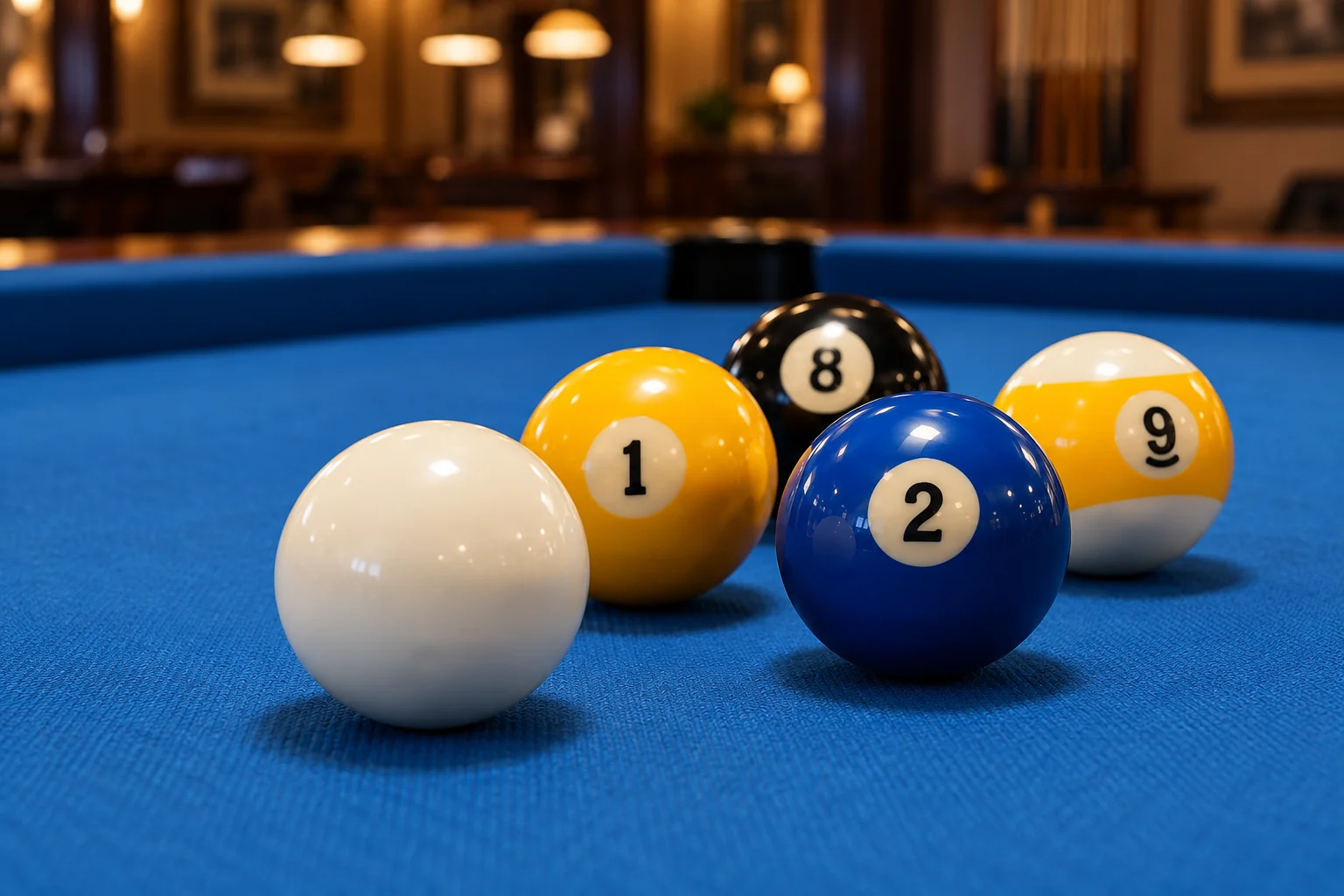
Separate a competition reference from your table requirement
The current World Pool Association rules page links equipment specifications for sanctioned competition. That document describes a complete American pool set as one cue ball and fifteen numbered object balls and gives a 2¼-inch competition diameter. It also warns that the specifications do not necessarily apply to commercial home tables.
Use that specification as a reference, not a universal shopping shortcut. English pool, snooker, carom billiards, novelty tables and some coin-operated systems can require different equipment. The table maker or operator is the authority for a return mechanism and any model-specific limitation.
Complete the six-field buying worksheet
Write unknown instead of filling a gap with a familiar assumption. A material label, tournament word or premium price is not a tolerance report, durability test or guarantee of suitability for your table.
When a listing gives inches and you want a metric comparison, record the published value and the conversion separately. NIST explains SI length units; one inch is defined as exactly 25.4 millimeters, so 2.25 inches converts to 57.15 millimeters. Do not use a converted nominal value as evidence of tighter manufacturing tolerance.
| Field | Record before shopping | Reject when |
|---|---|---|
| TABLE | Maker/model if known; drop pockets or automatic return | Compatibility is assumed from appearance |
| GAME | American pool, English pool, snooker, carom or another format | The set contents do not match the game |
| SIZE | Published nominal diameter and any stated tolerance | Only a photograph or vague standard-size label is supplied |
| SET | Required ball count, numbering and cue-ball type | The package contents are incomplete or ambiguous |
| VISIBILITY | Number size, color separation and camera/room lighting | Important balls are difficult to distinguish in your conditions |
| REPLACEMENT | How to identify and obtain a matching individual ball | No model identity or replacement route is available |
Use markings for recognition, not performance promises
Traditional solids and stripes make the two groups recognizable, while alternative color palettes can change familiar visual cues. Review the full set under lighting similar to your room. For recorded practice, check a sample image from the camera position because two colors that look distinct nearby can merge on video.
A spotted cue ball can make rotation easier to observe. It does not create spin or measure spin rate by itself. Treat dots, training grids and high-contrast numbers as feedback features, then clear compatibility through the same size and return-system gates as a plain ball.
Choose one replacement or a matched set
Worked example: a drop-pocket home table uses a documented 2.25-inch American pool set, one object ball is missing, and the remaining balls share a readable model identity. The narrow task is to confirm one matching replacement. If the box and model identity are absent and several balls differ visibly, the decision changes to documenting the whole set before buying anything.
Keep the replacement-cue-ball decision separate. That narrower guide adds return compatibility and practice-marking questions that a full-set comparison should not repeat.
| Observation | One-ball path | Whole-set path |
|---|---|---|
| One ball lost; range and size documented | Seek the exact matching identity | Usually unnecessary |
| One ball chipped or cracked | Remove it and ask for the correct replacement | Compare if the match is unavailable |
| Several unrelated replacements | Another spare adds uncertainty | A documented matched set may be clearer |
| Several balls visibly damaged or inconsistent | Do not conceal the condition | Assess the set and table together |
| Single unexplained roll | Repeat on other table areas | Do not condemn the set from one shot |
Choose a replacement cue ball when the white ball is the only item being replaced.
Understand pool-ball consistency for a separate evidence guide about measurable consistency.
Run a receiving inspection before play
The inspection is an acceptance check, not a precision laboratory test. A household tape cannot establish roundness or a small tolerance. Preserve the original condition when a documented specification appears wrong.
- Match the package identity to the order record.
- Count one cue ball and fifteen numbered object balls for a conventional American pool set.
- Inspect every surface under good light for chips, cracks, missing numbers or visible mismatches.
- Confirm the published nominal size and cue-ball type against the worksheet.
- Rack the clean, undamaged set without altering it and note any obvious mismatch.
- Keep packaging and contact the seller before modifying anything when the check fails.
Keep care and buying as separate tasks
The WPA competition specification describes clean, unwaxed balls and a clean cloth free of dirt and dust. For your equipment, follow the current care directions supplied for its material and avoid improvised abrasives or coatings. Cleaning can reveal a defect; it cannot repair missing material or make an incompatible cue ball work in a return system.
Record the chosen set, date, nominal size and replacement identity. That small equipment record makes a later lost-ball or care decision more reliable than memory.
Clean pool balls and decide when to replace them after the buying decision is complete.
Inspect balls before practice for a short session-start safety check.
Sources and further reading
References support the specific factual information above. The practical checklists are Ariakon editorial guidance.