
Shot strategy · 2 min read
Simplify Pool Shot Decisions Without Playing Passive
Keeping a pool decision simple does not mean rolling every ball softly or refusing an aggressive opportunity. It means removing difficulty that does not buy a useful advantage. The best simple route still solves the layout, protects the next shot and gives the stroke a clear job.
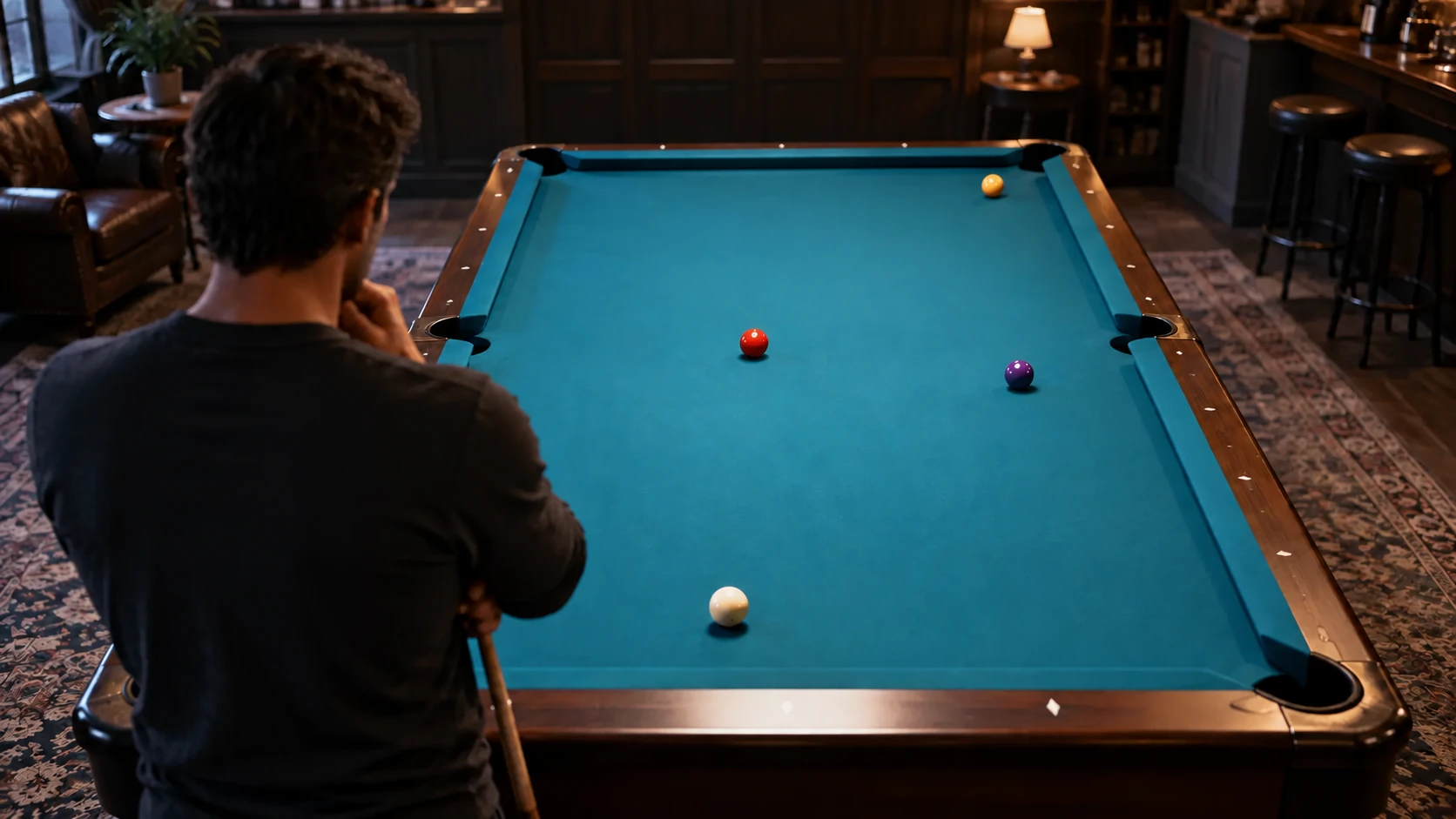
Define the result before the technique
Name the pocket, the next-ball side and an acceptable cue-ball zone. Until those are clear, debating draw, follow or sidespin is backwards: technique should serve the route.
Make the zone as large as the pattern permits. A whole half-table lane is easier to deliver than a coin-sized point and often leads to the same next shot.
Test the natural route first
Begin with center ball, natural follow or a plain stop path. These routes are easier to predict because they reduce cue elevation, speed sensitivity and squirt-swerve compensation.
Add sidespin only when it meaningfully widens the landing zone, avoids traffic or creates a needed angle. Being able to use spin is not a reason to use it.
Count transitions, not cushions
A three-cushion route can be simple when it follows a natural angle into a large zone. A one-cushion route can be difficult when it crosses a narrow line at exact speed.
Compare how many things must go right: thin contact, power, spin, traffic, rail points and speed window. Prefer the route with fewer sensitive transitions, not automatically the route with fewer rails.
Keep aggression tied to value
Simple play is not passive play. A firm breakout or attacking shot can be correct when it opens the rack and the miss leaves limited opportunity.
Likewise, a safety is not timid when the offensive option demands several low-margin events. Compare the entire inning rather than judging courage by one shot.
Give the stroke one instruction
Reduce the final cue to one controllable intention such as smooth medium speed, finish through center or hold the stop line. Stacking technical reminders often interrupts a movement you already know.
If you are still choosing between routes in the stance, stand up. A short reset is simpler than steering halfway through the stroke.
Run a simplicity audit
- Mark the desired next-ball side and widest useful zone.
- Draw the natural cue-ball route first.
- List every extra variable in the alternative route.
- Ask what advantage each extra variable actually buys.
- Choose the lowest-complexity route that still solves the pattern.
- Review the decision separately from whether the ball happened to fall.