
Equipment care · 4 min read
Plan and Accept a Pool Table Cloth Replacement
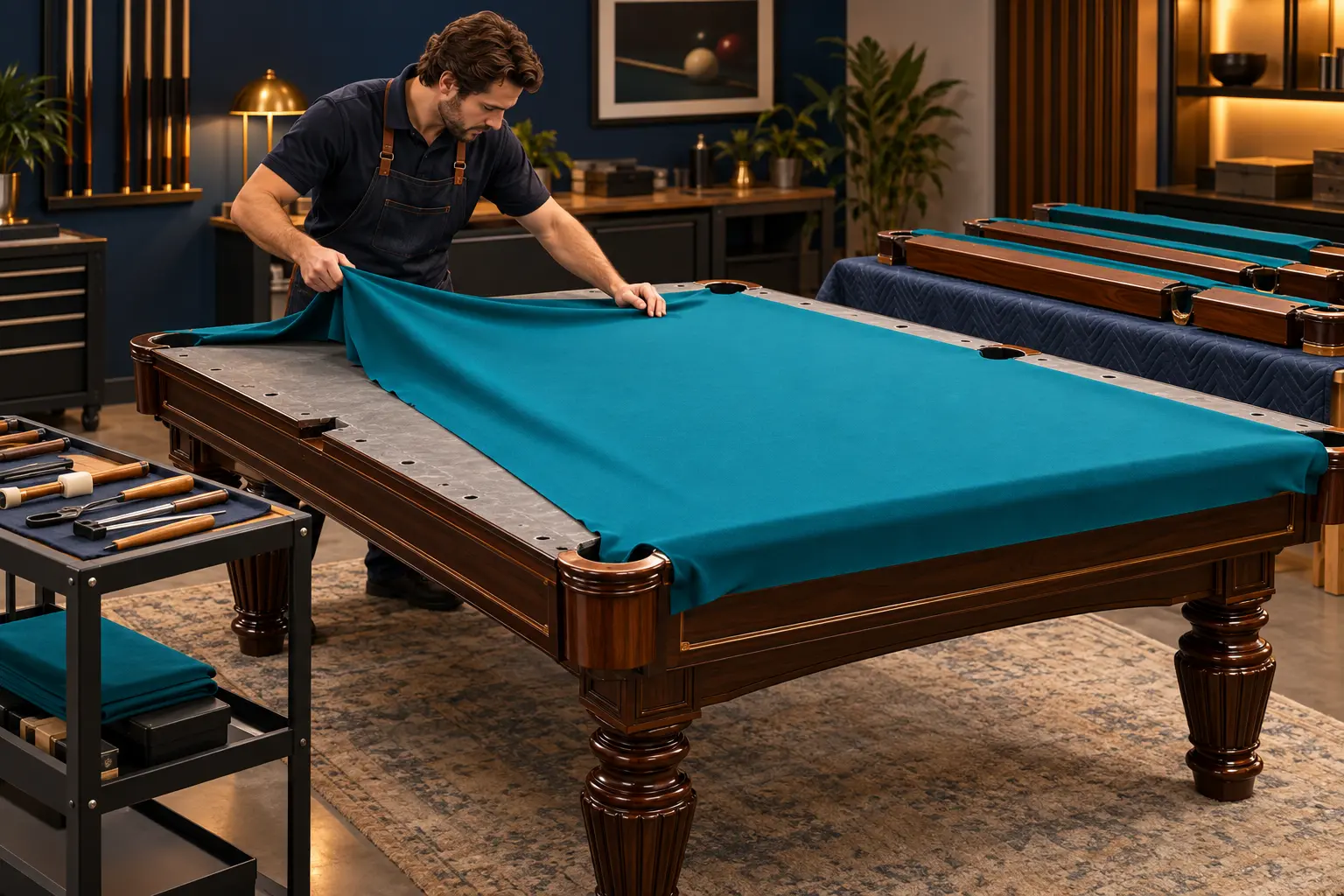
Replacing pool table cloth changes a fitted playing surface, not just a visible color. Rails, pockets, slate seams and fastening details become part of the job. Use the NEED–IDENTITY–SCOPE–ACCEPT record to decide whether replacement is justified, give a qualified installer an exact brief and verify the finished table without pretending one generic method fits every table or cloth.
Separate cloth failure from another table problem
Record the observation before cleaning or adjusting anything. Cloth cannot correct an unlevel frame, loose rail, damaged cushion or dirty ball. If the table has structural movement, water exposure, torn backing or an exposed fastener, stop play and have the table assessed before ordering material.
A cosmetic color change is a valid owner preference, but label it honestly. Keeping maintenance, appearance and play defects in separate columns makes the quote easier to compare.
| Observation | Check before replacement | Replacement signal | Stop and service |
|---|---|---|---|
| Ball drifts on slow roll | Level and clean ball | Visible loose or distorted cloth | Slate or frame movement |
| Table feels slower | Clean by documented method | Persistent worn track or contamination | Unknown chemical or moisture damage |
| Break area looks pale | Inspect under even light | Thin, torn or open weave | Slate is visible or fastener is exposed |
| Pocket rejects oddly | Inspect facing and fold | Loose or raised cloth fold | Damaged cushion, facing or pocket liner |
Build the table IDENTITY record
Measure the playing surface between opposing cushion noses, not the outside cabinet. Do not remove rails merely to fill a blank. Unknown is a useful answer because it tells the installer what must be confirmed on site.
The current international equipment document distinguishes playing surface, cloth, fastening and pocket-fold requirements for covered competition tables. Treat those as a bounded reference, not a universal home-table recipe.
| Field | Record | Evidence |
|---|---|---|
| Maker and model | ___ | plate, receipt or cabinet photo |
| Playing surface | ___ × ___ | cushion-nose to cushion-nose |
| Bed construction | one / three piece / unknown | service record; do not disassemble to guess |
| Slate backing | wood-backed / unframed / unknown | safe underside photo |
| Rail and pocket condition | ___ | six rail photos and six pocket photos |
| Current cloth identity | known / unknown | label, invoice or unknown |
| Access route | ___ | door, stair, floor and parking notes |
Compare the complete SCOPE, not one price
Ask the installer to name the exact cloth and the current installation instructions that control orientation, cuts, fastening and any adhesive. Do not substitute a spray, cutting layout or stretch figure from a different material.
A low quote that excludes rails, leveling or damaged parts is not directly comparable with a complete scope. Keep optional repairs separate and require approval before the scope changes.
| Included item | Quote A | Quote B | Quote C |
|---|---|---|---|
| Bed and all rail cloth | ___ | ___ | ___ |
| Rail, pocket and hardware removal | ___ | ___ | ___ |
| Slate seam and level inspection | ___ | ___ | ___ |
| Cushion and facing condition report | ___ | ___ | ___ |
| Approved fastening or adhesive method | ___ | ___ | ___ |
| Debris removal and room protection | ___ | ___ | ___ |
| Return visit, workmanship and material terms | ___ | ___ | ___ |
Prepare the room and preserve evidence
- Clear the table perimeter and the full access route without leaning objects on the rails.
- Remove balls, cues, chalk, lights that must be moved and fragile room items.
- Photograph every rail, pocket and visible defect before work starts.
- Agree where hardware, rails and tools may rest on padded surfaces.
- Keep children, pets, food and drinks outside the work area.
- Save the product label, unused offcut, invoice and final care instructions.
Run a sixteen-route ACCEPT check
For the sixteen roll routes, use one clean ball, a gentle push without cue spin and paired paths in opposite directions. A repeated drift can come from the ball, level, slate or cloth; the card locates a concern but does not diagnose the cause by itself.
Do not resume hard breaking until the installer confirms that the documented adhesive or other installation process is ready. Preserve the failed route, photo and time rather than trying to stretch or cut the cloth yourself.
| Check | Attempts | Pass evidence | If it fails |
|---|---|---|---|
| Bed inspection | one full walkaround | no wrinkle, loose edge, cut or raised seam | photograph before play |
| Pocket folds | six pockets | secure folds; no ridge into ball path | hold acceptance |
| Slow straight rolls | eight lengthwise | no repeatable cloth-induced deflection | rotate ball; check level |
| Slow cross rolls | eight across width | no repeatable cloth-induced deflection | mark location and stop |
| Rail and sight check | six rails | secure and correctly returned | do not tighten blindly |
| Care handoff | one record | method and waiting time documented | ask before cleaning or play |
Choose cloth with a requirement and sample worksheet before an installer orders material.
Measure room clearance before changing table plans when the project also changes table placement.
Sources and further reading
References support the specific factual information above. The practical checklists are Ariakon editorial guidance.