
Mental training · 3 min read
Use Pool Shot Visualization as Part of a Real Practice Routine
Visualization can help organize attention and rehearse a familiar action, but it does not pocket a ball or reveal a wrong assumption by itself. The useful version is brief and specific: see the required route and feel the practiced delivery, then shoot and compare the real result with the plan.
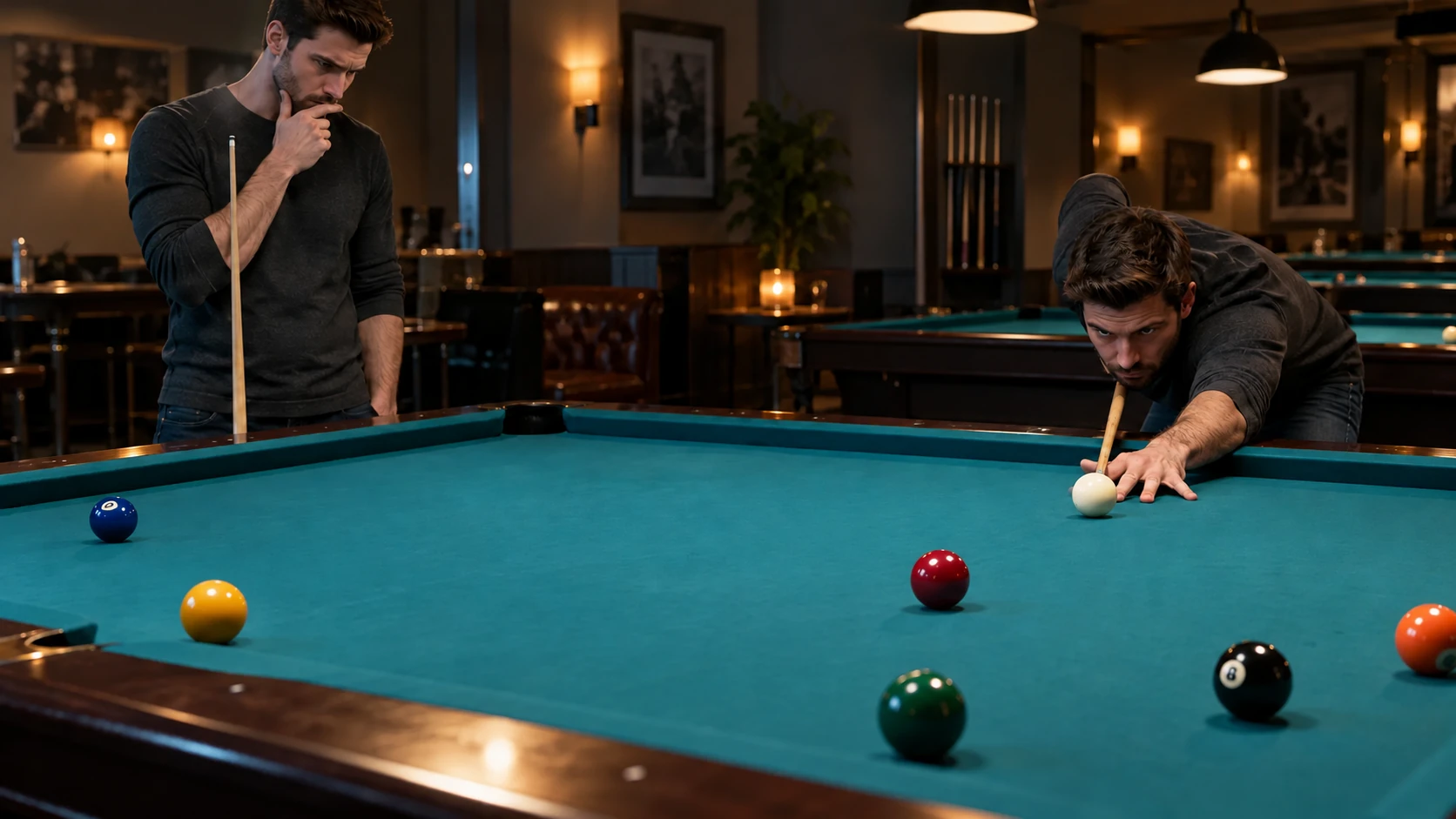
Visualize an answerable shot
Begin with a shot you can set up consistently. Define the object-ball pocket, cue-ball contact, intended speed and a broad finishing zone. A vague picture of winning gives no technical detail to test.
Use the table from your real standing view. Include cushions and traffic that matter; do not imagine a perfect empty route that the layout does not allow.
Rehearse process as well as outcome
Picture the cue ball contacting the object ball and arriving in the zone, then include the approach, bridge, smooth delivery and balanced finish you have actually practiced. Keep the image first-person if that best matches your routine.
If an internal picture is difficult, use concise words or trace the route while standing. Imagery vividness varies, and a clear external plan can still support good execution.
Keep the rehearsal brief
One or two deliberate repetitions before entering the stance are enough for a routine test. Replaying every possible miss can delay commitment and turn planning into rumination.
Once down, return attention to the selected aiming reference, speed and finish. Do not keep redrawing the whole pattern during the delivery.
Pair imagery with physical practice
Recent sport reviews report benefits from motor imagery and from combining action observation with imagery, but effects depend on task, dosage and study quality. The evidence supports a supplement to physical practice, not a replacement for table feedback.
Shoot the imagined setup in blocks that include real attempts. Mark the cue-ball finish and adjust the next plan from the actual miss rather than making the imagined result more perfect.
Use observation when the action is unfamiliar
For a new route, first watch a qualified demonstration or a clear recording from the relevant angle. Then imagine the same key action and perform a simplified version. Combined observation and imagery can provide a more concrete model than invention alone.
Do not rehearse a painful motion, an unsafe jump technique or an equipment use you have not been taught. Seek appropriate coaching or clinical advice when physical limits are involved.
Run a twelve-shot imagery test
- Set one familiar shot and mark a realistic cue-ball zone.
- Shoot four attempts with your normal routine and record both outcomes.
- Shoot four with one brief process-and-route image before the stance.
- Shoot four normally again to reduce novelty effects.
- Compare pocket and position-zone results, not confidence alone.
- Keep, revise or discard the imagery cue based on several sessions.
Sources and further reading
References support the specific factual information above. The practical checklists are Ariakon editorial guidance.