
Player development · 3 min read
Build Better Pool Practice Without Gender Stereotypes
Gender is not a useful shortcut for deciding who should receive difficult drills, technical coaching or competitive opportunities. Pool skill is individual and measurable. A stronger practice group evaluates the player in front of it, gives everyone useful repetitions and adjusts instruction from evidence rather than stereotypes.
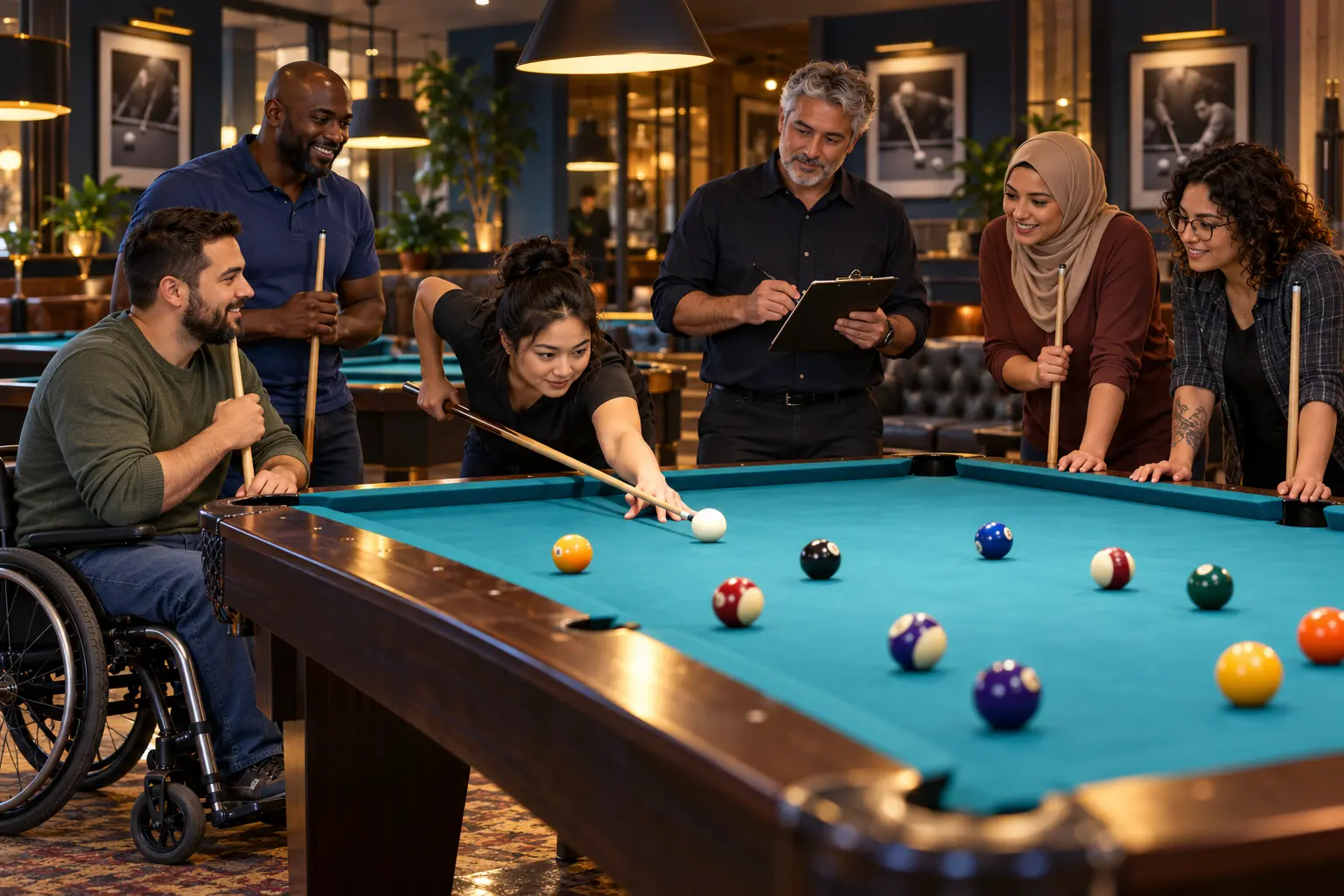
Measure skills directly
Use the same baseline layouts for every player: straight shot delivery, speed control, position routes, safeties, kicks and a short runout test. Record the result and let that evidence set the next difficulty.
Keep fundamentals and game decisions in separate columns so one strong skill does not hide another skill that needs work. Compare each player with their own recorded baseline rather than assigning an ability label from another person's result.
Give equal access to meaningful repetitions
Rotate break attempts, table time and coaching attention by a visible schedule. Do not give one player only beginner tasks while another receives strategy work without first checking their scores and goals.
In group drills, use levels within the same skill. Everyone can work on speed control, with target size and distance adjusted to current performance. That preserves a shared session without pretending every player needs identical difficulty.
Coach the result and the decision
Describe observable behavior: the cue ball finished short, the chosen route crossed traffic or the bridge moved at contact. Avoid comments about how someone of a gender is expected to move, compete or handle pressure.
Ask what the player intended before prescribing a correction. Two misses that look similar may come from different decisions. A clear intent, ball result and video angle provide better evidence than an assumption about temperament.
Design a room people can use
Provide cues in several lengths and weights, stable mechanical bridges and clear space around at least one table. Keep equipment within reachable storage and allow enough time for a player who uses an aid to set up safely.
The WPA has described active work on para billiards and gender inclusivity, including educational programs and accessibility requirements. A local room does not need to wait for a global classification system to remove obvious barriers and set respectful conduct expectations.
Separate development from event categories
Some competitions have men's, women's, junior, open or para categories. Respect the published eligibility and format for the event. Those categories do not replace individual skill assessment during coaching.
When preparing a group for an event, use the same rules knowledge, pattern planning and pressure practice for everyone. Adjust drill level from current performance and the demands of the event.
Review the practice group with simple evidence
- Compare table time and break attempts for each player.
- Check whether feedback is specific and actionable.
- Ask whether everyone received work at an appropriate challenge level.
- Record equipment or access barriers that prevented a drill.
- Set one change for the next group session and verify that it occurred.
Sources and further reading
References support the specific factual information above. The practical checklists are Ariakon editorial guidance.