
Equipment guides · 3 min read
How to Evaluate a Pool Product Demonstration Video
A polished video can show how a pool product looks and how it is used. It does not automatically prove accuracy, durability, added spin or better results. Evaluate the setup, comparison and claim separately before treating a demonstration as purchase evidence.
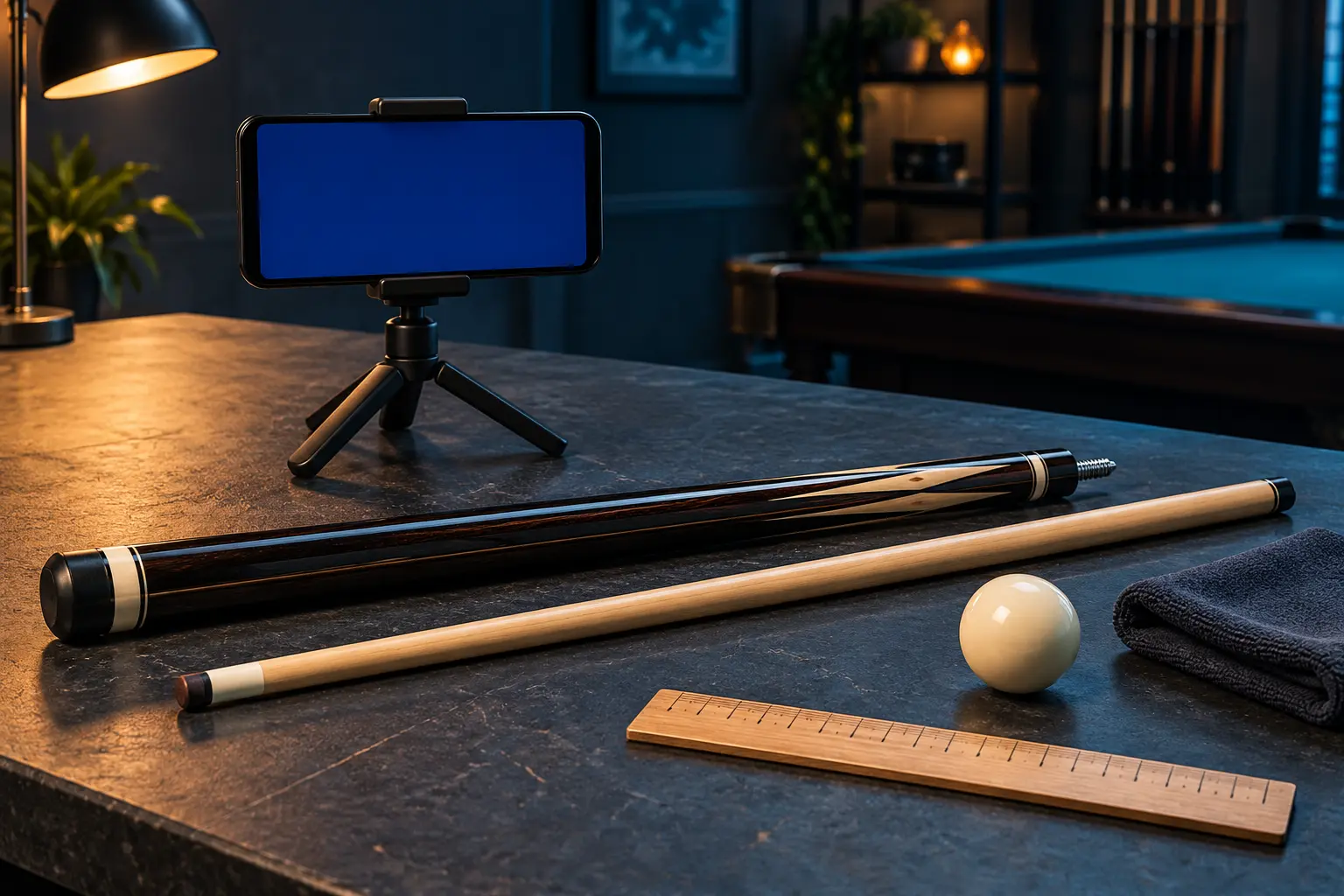
Write down the exact claim
Separate what the video visibly shows from what the presenter says it proves. A close view may show a joint, finish or tip shape. A made shot may show that one attempt succeeded. Neither alone establishes long term durability or a higher success rate than another product.
Translate broad language into a testable question. Instead of better control, ask whether the same player and shot produced a smaller cue ball stopping area over a stated number of attempts. If the claim cannot be defined, the video may be inspiration rather than evidence.
Check whether the setup is disclosed
- Product model, size and configuration.
- Cue, shaft, tip and chalk used when relevant.
- Table size, cloth and ball condition.
- Shot speed, tip position and starting layout.
- Number of attempts and whether misses are included.
- Any editing, selected takes or changed conditions.
Look for a fair comparison
A useful comparison changes the product while holding important conditions stable. If the player, stroke, table, camera angle and shot all change, you cannot tell which difference caused the result. Side by side footage is not controlled merely because it shares a frame.
A comparison also needs a relevant baseline. Showing a new cue after intentionally poor use of another cue does not establish superiority. Look for equal setup, equal opportunity and a measurement connected to the claim.
Distinguish measurement from visual drama
Slow motion can reveal contact and movement, but perspective can exaggerate distance. Camera position, lens distortion and playback speed matter. A ruler or grid helps only when it lies in the same plane as the measured action and the method is explained.
For durability, one impact or flex does not replace a repeated protocol. For spin or deflection, one successful shot does not establish an average. Ask whether the result was measured across enough attempts to show ordinary variation.
Identify endorsements and relationships
The FTC advises that endorsements must reflect honest experience and that advertisers need support for claims made through endorsers. A material relationship, such as payment or free product, should be disclosed clearly enough for viewers to notice and understand it.
A disclosed sponsorship does not make a demonstration false. It gives you context for weighing the recommendation. An undisclosed relationship does not turn a visible measurement into reliable evidence either; evaluate the method and the relationship separately.
Use the video to prepare your own check
If possible, inspect the product specifications and written instructions before trying it. Recreate only a safe, ordinary use case. Use your existing equipment as the baseline and record several attempts under the same conditions.
Do not repeat destructive flexing, extreme tip offsets, jump attempts or installation steps simply because a video shows them. Follow the manufacturer’s limits and use a qualified cue technician when the work requires one.
A quick evidence checklist
- What exact claim is being made?
- What result is directly visible?
- What important conditions remain unknown?
- Were misses and repeated attempts shown?
- Was the comparison kept equal?
- Is any paid or product relationship disclosed?
- Does written product information support the claim?
- What ordinary test could you repeat safely?
Let the evidence set the conclusion
A good demonstration can answer a narrow question clearly. It does not need to prove that the product is best in every category. Prefer conclusions that match the actual test, such as this joint assembled in the shown way or this tip retained its shape through the stated protocol.
When the evidence is incomplete, keep the conclusion open and compare independent information. Buying decisions improve when an entertaining video begins the investigation instead of ending it.
Sources and further reading
References support the specific factual information above. The practical checklists are Ariakon editorial guidance.