
Equipment guides · 3 min read
Evaluate a Pool Table Before You Buy or Practice Seriously
A table can look attractive while hiding loose rails, damaged slate, failing cushions or an expensive access problem. Evaluate the structure and playing response before the cloth color. For a purchase, include disassembly, transport, leveling and recovery in the decision; for a practice table, document its quirks before diagnosing your stroke.
Identify the table and the room
Ask for the maker, model, nominal playing size, age, assembly history and any replaced parts. Measure the room and the full access path, including doors, stairs and turns. A table that fits the floor plan may not fit through the route to it.
Confirm what is included and who will disassemble and reinstall it. Slate sections are heavy and fragile; use qualified table mechanics and appropriate moving help rather than treating transport as ordinary furniture work.
Inspect the structure before the cloth
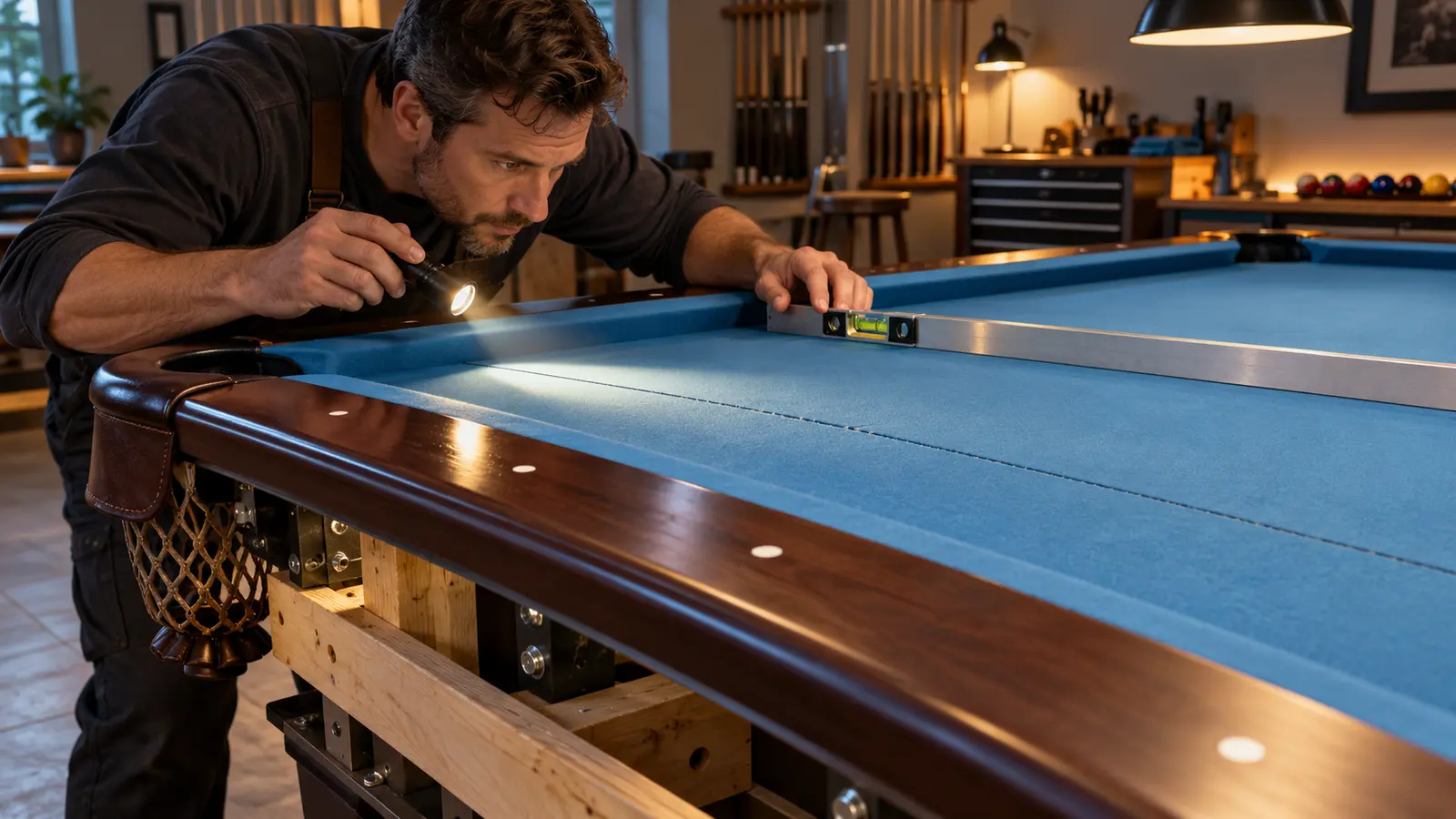
Look underneath with permission and adequate lighting. Check legs, frame, cross members, fasteners and slate support for cracks, movement, moisture damage or improvised repairs. Do not crawl under an unstable table or loosen hardware during an inspection.
Sight along the rails and table bed. A small carpenter's level can reveal gross setup problems, but a professional installation assessment is more useful than one reading on an unknown floor.
Check slate, seams and cloth
Roll clean balls slowly in several directions and watch for repeatable drift. Test different parts of the bed; a dirty ball, worn cloth or uneven floor can imitate a slate problem. Ask whether the slate is one piece or sectional and whether any cracks or seam repairs are known.
Inspect cloth for tears, burns, loose areas, heavy wear and evidence of spills. Cloth is replaceable, but replacement affects the total cost and normally requires rail work and professional leveling.
Test cushions and pockets consistently
Listen and feel for obvious dead areas by sending similar shots into each cushion. Compare rebounds from matching positions and speeds. One result is not a diagnosis; repeat the test after cleaning the balls.
Inspect cushion noses, facings, pocket liners and shelf. WPA equipment specifications define tournament pocket measurements and cushion characteristics, but a home table is not defective merely because it differs. The specifications give you vocabulary for a precise comparison.
Price the installed result
Add purchase price, professional disassembly, transport, access equipment, replacement cloth or cushions, installation and leveling. Ask a local mechanic for a written estimate when the condition is uncertain.
Do not pay a tournament-table premium for an unidentified table based only on appearance. A documented, serviceable frame and slate with a realistic installation quote can be a better value than fresh cloth hiding structural problems.
Use a written inspection record
- Photograph identification plates and included accessories with permission.
- Record room, table and access dimensions.
- Note structural damage, slate history and known repairs.
- Repeat slow rolls and cushion tests from matching positions.
- List every transport and installation cost before making an offer.
- Walk away if safe handling, ownership or condition cannot be established.
Sources and further reading
References support the specific factual information above. The practical checklists are Ariakon editorial guidance.