
Practice drills · 4 min read
A Pool Safety Practice Game That Rewards Control
A useful safety has two jobs: it must be legal, and it must leave a reply you intended. This original practice game separates those jobs so you can see whether a failed attempt came from contact, speed or the choice of target. Play short sets with a partner, or switch between shooter and opponent during solo practice.
Agree on the rules before keeping score
Choose the rules you normally compete under and identify the legal object ball for each layout. For this exercise, use an ordinary shot after the break, not a push out or a special opening shot. Under the WPA general foul rule, if no ball is pocketed, a ball must reach a rail after the cue ball contacts an object ball; the required first contact depends on the discipline.
Safety declarations depend on the game. WPA 8 ball permits a safety call under its call shot rule, while its current 10 ball rules explicitly exclude that call. Confirm the procedure for your chosen game. The scoring below is a practice format, not an official league rule.
Begin with one legal target and one blocker
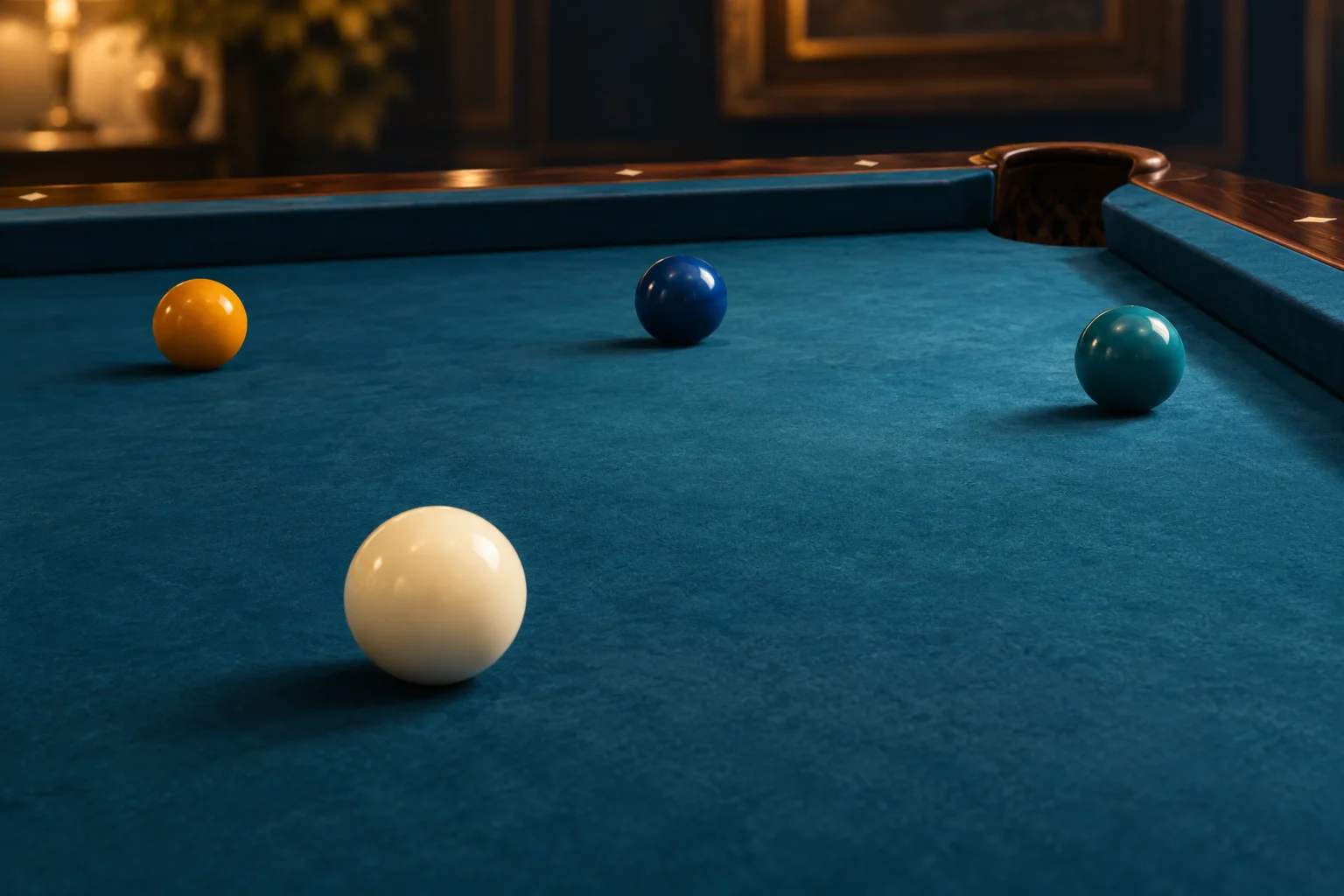
Place a legal object ball away from a pocket and a separate blocking ball near the middle of the table. Leave enough space to make a normal stroke. Put the cue ball where you have a clear first contact with the legal target. Use a simple layout that does not depend on a thin frozen ball judgment.
Choose a cue ball destination behind the blocker and an object ball destination toward a cushion. Before shooting, walk to the planned cue ball position and examine the opponent's view. A ball that looks hidden from your original stance may remain fully visible from the other end.
Score the intention and the result separately
First decide whether the shot was legal. A foul scores zero regardless of how well the cue ball is hidden. For a legal shot, award one point if the cue ball finishes within your chosen target area. Define that area before shooting, using nearby diamonds as references rather than placing markers on the cloth.
Add one point if the object ball reaches its planned region without leaving an easy direct pot. Add one further point if the opponent has no direct line to the required first object ball. The maximum is three points. These are practice judgments; agree on the regions and what counts before beginning the set.
Make the opponent play the reply
After every attempt, let the other player try the best legal response. Record whether the original safety actually created the problem you expected. A blocked direct shot can still leave an easy kick or a helpful escape route.
Do not let the safety score become the only measure. Write a brief reply note such as easy one rail contact or difficult distance control. This tests the decision behind the shot, not merely whether a ball disappeared behind another ball.
Use ten attempts as one set
Reset the same layout for five attempts each. Change only one detail in the second set: the cue ball starting distance, the width of the target area or the blocker position. Avoid changing all three together because you lose a useful comparison.
For solo play, evaluate the opponent's view after every shot and try the reply yourself. Keep legality, destination and reply notes in separate columns. A lower score after making the target area smaller is not proof that your safety skill has worsened.
Diagnose the common failures
- Legal contact but cue ball runs past the blocker: simplify the speed demand.
- Cue ball hides but object ball becomes easy: choose a better object ball destination.
- Repeated fouls: widen the contact margin and confirm the required rail action.
- Good result only once: repeat the identical layout before increasing difficulty.
- Opponent escapes comfortably: inspect the available kick and bank routes before the next attempt.
Bring the skill back into ordinary racks
At the end of practice, play a few normal racks and pause before difficult shots to compare offense with a safety. Identify the desired destinations before deciding. The purpose of the drill is to make defensive choices available during play, not to force a safety on every turn.
Save one layout that exposed a weakness and revisit it next session. A small collection of repeatable situations gives you a better picture of progress than a long session of unrelated defensive experiments.
Sources and further reading
References support the specific factual information above. The practical checklists are Ariakon editorial guidance.