
Stroke fundamentals · 3 min read
Keep the Pool Cue as Level as the Shot Allows
A pool cue cannot be perfectly level on most normal shots because the rail and cushion sit above the playing surface. The practical goal is to keep it as level as the table and shot allow. Unnecessary elevation changes the way the tip drives the cue ball into the cloth, can increase swerve with sidespin and often makes accurate contact harder.
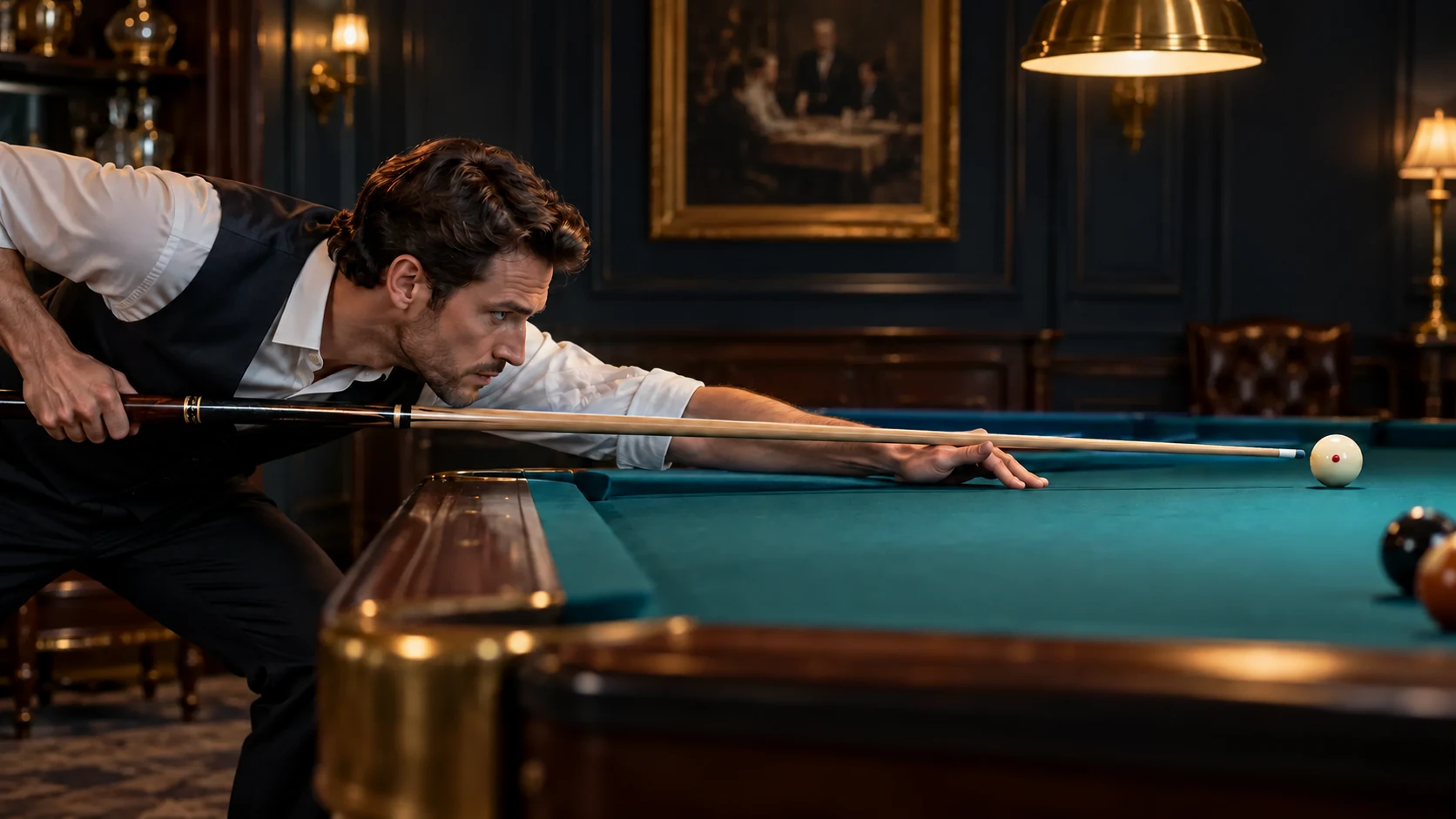
Accept the small angle the table requires
With the bridge on the cloth and the butt above the rail, the cue normally points slightly downward. Do not contort the grip below the rail to chase a physically perfect zero-degree angle.
Instead, lower the grip until the cue clears the rail and your forearm can swing freely. That is the near-level baseline for the shot in front of you.
Remove elevation added by posture
A stance that is too upright, a bridge that is too high or a raised grip can create a steeper cue than necessary. Check the cue from the side and rebuild the stance before changing the stroke.
Keep enough space for the cue to pass the body. Lowering the butt is useful only if it does not make the hand collide with a hip, rail or pocket.
Know what elevation changes
Driving the cue ball downward can create hop or bounce, especially with speed. With sidespin, a steeper cue can also increase swerve, changing the path after the initial squirt.
The effects depend on speed, cloth, distance, tip offset and angle. Treat elevation as another variable to calibrate, not as a free source of draw or power.
Elevate only for a clear reason
A nearby obstructing ball, a cue ball tight to the cushion or a legal specialty shot may require a raised butt. Choose the minimum angle that provides clearance and still lets you strike the intended point.
Reduce speed and tip offset while learning the shot. If the required angle makes accurate contact doubtful, choose a different route rather than pretending the normal stroke is unchanged.
Compare the cue-ball track
Shoot a straight center-ball shot up and down the table with your usual cue angle. Repeat with the butt lowered to the practical minimum and compare whether the cue ball returns toward the tip.
Film from the side to see whether the cue ball leaves the cloth. A visible hop on an ordinary moderate-speed shot is a reason to check tip height, cue elevation and stroke delivery.
Use a level-cue checklist
- Set the bridge height for the intended tip contact.
- Lower the grip until the rail just clears.
- Confirm the cue misses the body and pocket hardware.
- Use the minimum elevation needed for obstacles.
- Reduce sidespin while learning elevated shots.
- Judge the result by contact, ball path and repeatability.