
Practice planning · 2 min read
Build a Pool Reference Notebook You Will Actually Use
A useful pool notebook is not a diary of every rack. It is a compact reference for facts you need again: the rule set in use, repeatable layouts, baseline scores, table-condition observations and fixes that survived a real test. Good notes shorten the next practice session because they tell you where to begin.
Give the notebook a fixed job
Choose one paper notebook or one offline file and reserve it for durable pool information. Separate it from casual match commentary, social posts and equipment wish lists so the pages remain easy to scan.
Start with four sections: rules and event links, setup diagrams, measured practice results, and decisions to revisit. Add a simple index at the front instead of relying on memory.
Save the rule source, not a paraphrase
Record the governing organization, discipline, document date and official link for each event. Rules can differ between world-standard play, a league and a local tournament, so a sentence copied without its source can become misleading.
Write only a short reminder beside the link. Before competition, confirm the organizer's current rules and any event-specific modifications rather than treating the notebook as the authority.
Draw setups that can be rebuilt
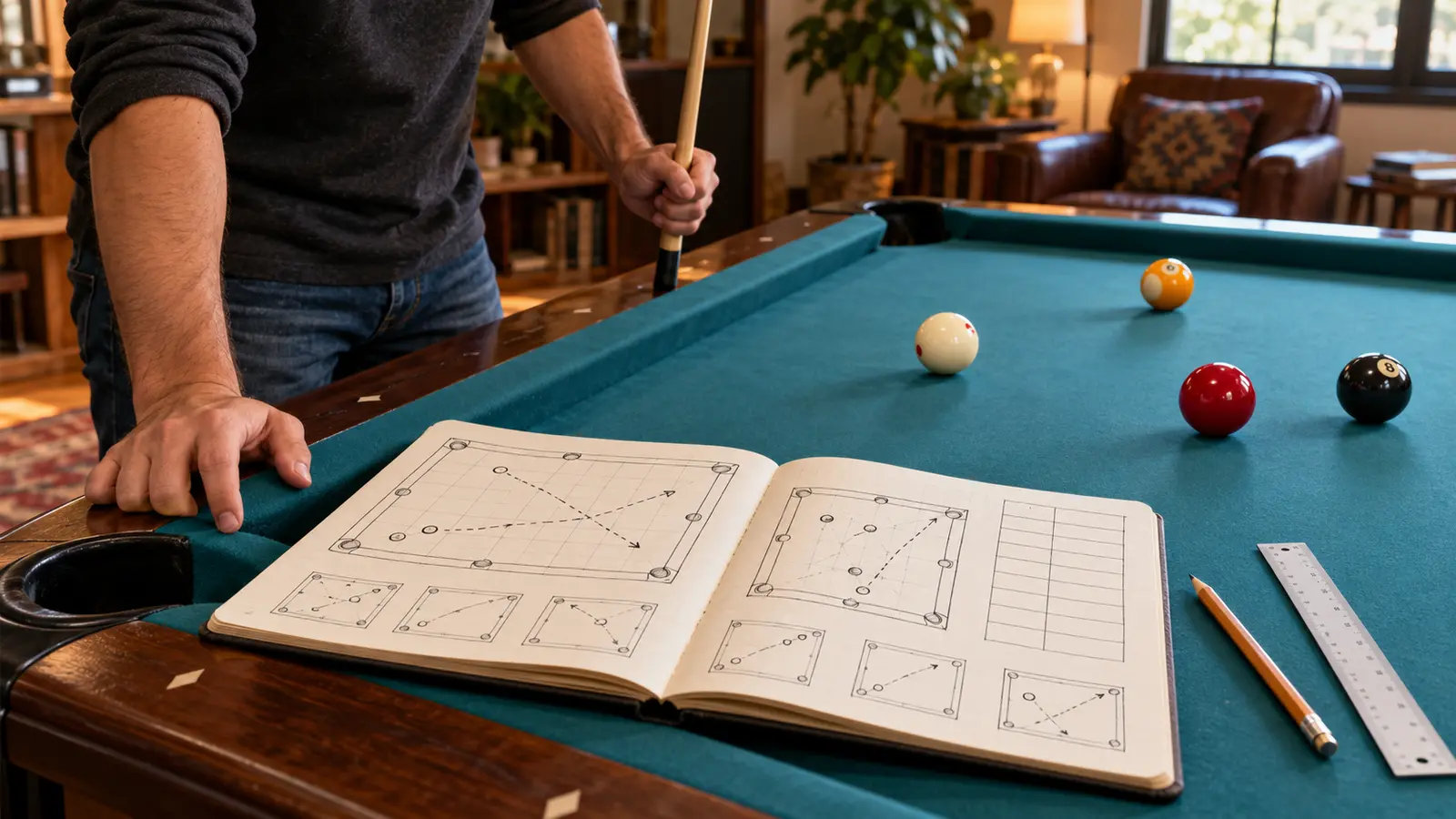
Sketch the rails, pockets and diamond references, then mark each ball from a fixed origin. Note whether a position is approximate or measured; a beautiful diagram is useless if the next setup is materially different.
Add the shot goal, allowed variation and stopping rule. For example, define a landing zone and number of attempts instead of writing only that the shot felt good.
Keep a baseline and one change
Record the date, table, drill, attempts and result before changing technique or equipment. That baseline gives later improvement a comparison point.
Test one deliberate change at a time. If stance, speed and tip position all change together, the notes cannot tell you what helped.
Write fixes as experiments
Use a three-part entry: symptom, possible cause, next test. Replace vague judgments such as bad stroke with an observable symptom such as the cue tip finishing left of the intended line.
After the test, label the idea kept, rejected or still uncertain. Preserving failed tests prevents the same guess from returning every few weeks.
Review on a short rhythm
- Before practice: choose one page and one measurable goal.
- After practice: record the baseline, the single change and the result.
- Before an event: verify the current official rules and organizer notices.
- Monthly: archive obsolete pages and rewrite only the durable conclusions.
- Never treat a private note, memory or old rule link as current official policy.
Sources and further reading
References support the specific factual information above. The practical checklists are Ariakon editorial guidance.